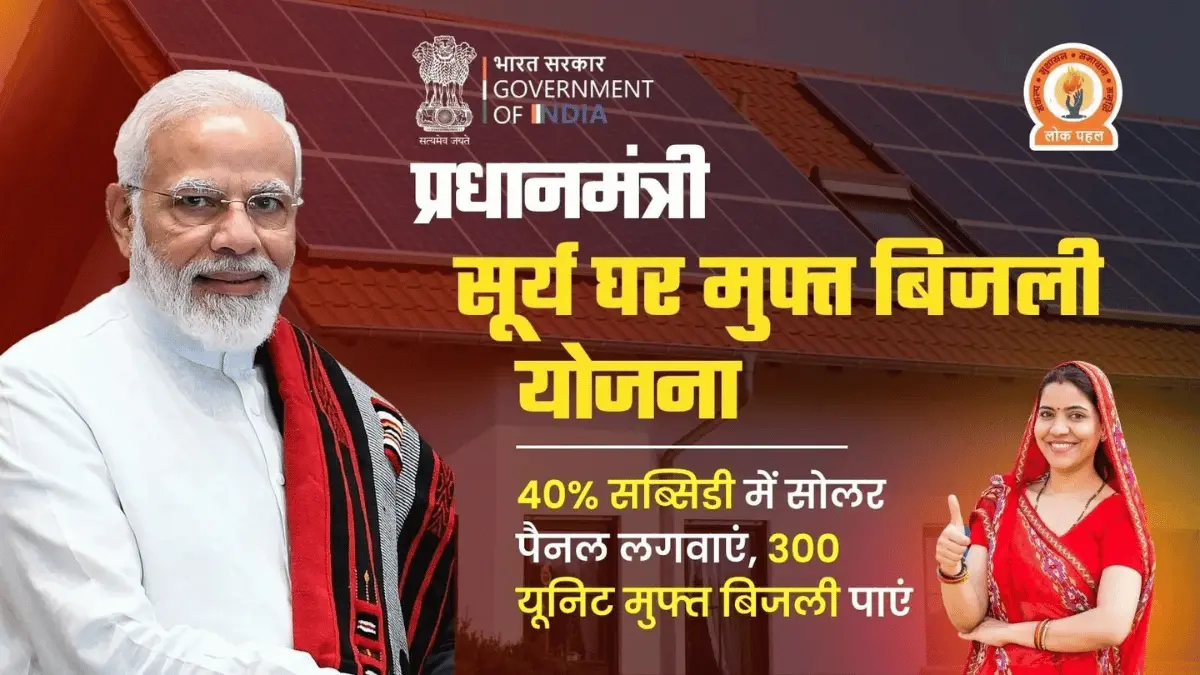
The sun, an inexhaustible source of energy, holds the key to a sustainable future. India, a nation blessed with abundant sunshine, is strategically harnessing this potential through ambitious initiatives like the PM Surya Ghar Muft Bijli Yojana: Promotes rooftop solar adoption. Launched by Prime Minister Narendra Modi on February 13, 2024, this scheme is a transformative step towards empowering households with clean, affordable electricity and fostering energy independence. With a substantial outlay of ₹75,021 crore (approximately US$ 9 billion), the Yojana aims to illuminate one crore (ten million) homes across the country by installing rooftop solar systems.
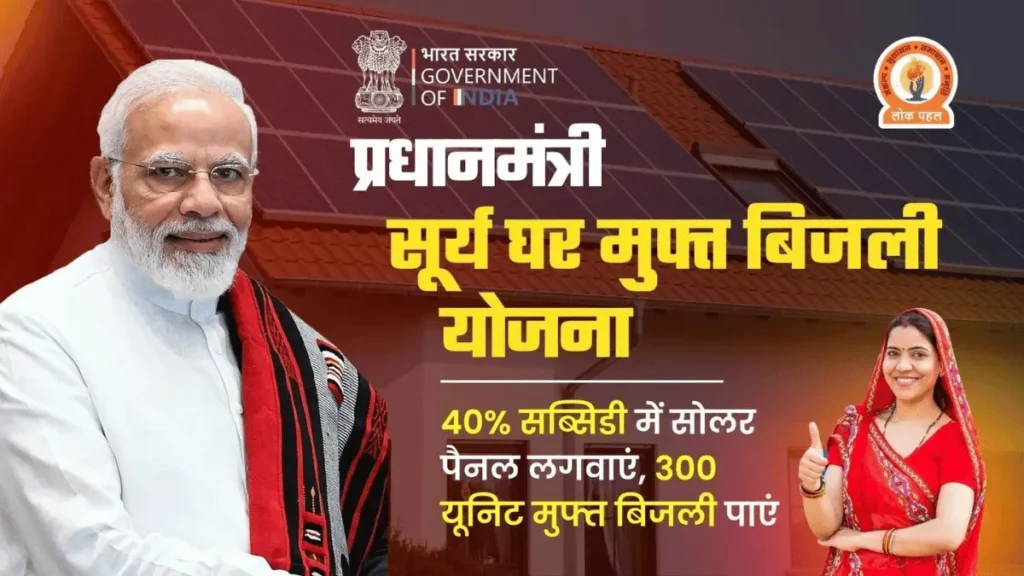
Table of Contents
Introduction to PM Surya Ghar Muft Bijli Yojana
The PM Surya Ghar Muft Bijli Yojana is a central government solar rooftop scheme designed to provide up to 300 units of free electricity per month to residential households. This initiative is a cornerstone of India’s commitment to sustainable development and climate goals, seeking to reduce reliance on fossil fuels and enhance the nation’s renewable energy capacity. By encouraging the widespread adoption of rooftop solar, the scheme aims to reduce the electricity expenditure of poor and middle-income families, making them self-sufficient in their energy requirements. The overarching vision is to establish India as a global leader in residential solar rooftop adoption and create a sustainable, inclusive solar energy ecosystem.
Unpacking the Benefits of Rooftop Solar Adoption
Embracing rooftop solar through the PM Surya Ghar Muft Bijli Yojana offers a multitude of benefits, extending from individual households to the national economy and the environment.
PM Surya Ghar Muft Bijli Yojana: Economic Advantages for Households
- Zero or Reduced Electricity Bills: The most immediate and tangible benefit for households is the significant reduction, or even elimination, of their monthly electricity bills. By generating their own power, families can save up to 90% on their electricity expenses.
- Income Generation: Households can earn additional income by selling surplus electricity generated by their rooftop solar systems back to the grid through net metering. This transforms consumers into “prosumers” – producers and consumers of energy.
- Long-Term Savings: With solar panels having a lifespan of 25 years or more and minimal maintenance, the initial investment offers lifetime benefits and a high return on investment, with an average payback period of just 3-4 years.
- Collateral-Free, Low-Interest Loans: The scheme also facilitates access to collateral-free, low-interest loans for homeowners, making the upfront cost of solar panel installation more manageable.
Environmental and Societal Impact
- Reduced Carbon Emissions: Each solar installation contributes to a substantial reduction in CO2 emissions, equivalent to planting 100 trees, thereby combating climate change and promoting a cleaner environment. The scheme is projected to reduce CO2 emissions by 720 million tonnes over 25 years.
- Increased Use of Renewable Energy: The Yojana significantly boosts India’s renewable energy capacity, aligning with national targets to achieve 500 GW of renewable energy by 2030 and meet 50% of its energy requirements through renewable sources.
- Energy Independence: Households become less dependent on the conventional electricity grid, enhancing energy security and resilience.
- Job Creation: The scheme is expected to create around 1.7 million (17 lakh) direct jobs across various sectors, including manufacturing, logistics, supply chain, sales, installation, and maintenance of solar panels. This also includes entrepreneurship opportunities for vendors and employment for youth with technical skills.
- Reduced Grid Load: Widespread rooftop solar adoption helps reduce the overall load on the national electricity grid.
Eligibility and Application: How to Join the Solar Movement
The PM Surya Ghar Muft Bijli Yojana: Promotes rooftop solar adoption is designed to be accessible to a wide range of Indian households. We encourage eligible citizens to participate in this green energy revolution.
Eligibility Criteria
To be eligible for the scheme, applicants must meet the following conditions:
- Indian Citizenship: The applicant must be a resident of India.
- Household Type: The scheme primarily targets poor and middle-income households. Only residential consumers or Residential Welfare Societies (RWAs) can apply.
- Property Ownership: Applicants must own a residential house with a roof suitable for installing solar panels. The roof should have sufficient space, direct sunlight, and be strong enough to support the installation.
- Electricity Connection: A valid electricity connection in the applicant’s name with their local Electricity Distribution Company (DISCOM) is mandatory.
- No Prior Subsidy: Applicants should not have previously availed of any other government subsidy for solar panels.
Step-by-Step Application Process
The application process for the PM Surya Ghar Muft Bijli Yojana is streamlined and primarily online through the official portal (pmsuryaghar.gov.in).
Here’s a general overview of the steps involved:
- Registration:
- Visit the official PM Surya Ghar Muft Bijli Yojana portal.
- Click on the ‘Consumer’ option and select ‘Apply Now’ or ‘Apply for Rooftop Solar’.
- Enter your mobile number, complete OTP verification, and provide details such as your state, electricity distribution company (DISCOM), electricity consumer number, and email.
- Login and Application Submission:
- Log in using your consumer number and mobile number.
- Fill out the online application form with required details, including consumer name, address, and PIN code.
- Upload necessary documents such as proof of identity (Aadhaar, PAN), proof of address, the latest electricity bill, roof ownership certificate, and bank details (cancelled cheque/passbook copy) for subsidy transfer. Digital passport-size photos may also be required.
- DISCOM Feasibility Assessment:
- Your local DISCOM will review your application and conduct a technical feasibility assessment of your rooftop and connection. This process typically takes 2-4 weeks, and you will receive notification via SMS or email.
- Vendor Selection and Installation:
- Once feasibility approval is received, you can browse a list of empaneled (registered) vendors on the official portal.
- Compare quotes from multiple vendors and select one for the installation. It is important to note that only installations by empaneled vendors are eligible for the subsidy.
- The chosen vendor will install the solar panels on your rooftop. Installation typically takes 1-3 days depending on the system size.
- Net Metering and Commissioning:
- After installation, the vendor will submit the plant details, and you will apply for a net meter.
- The DISCOM will then install and inspect the net meter, followed by the generation of a commissioning certificate.
- Subsidy Disbursement:
- Once the commissioning report is uploaded to the portal and verified, the subsidy amount will be directly transferred to your bank account within 30 days.
Subsidies and Financial Support for Rooftop Solar
A key component of the PM Surya Ghar Muft Bijli Yojana: Promotes rooftop solar adoption is the significant financial assistance provided to make solar energy affordable for households.
Subsidy Structure
The scheme offers direct subsidies for installing rooftop solar panels, with amounts varying based on the system’s capacity.
Here’s a breakdown of the subsidy structure:
System CapacitySubsidy Amount (per kW)Total Subsidy (Maximum)Up to 2 kW₹30,000₹60,0002 kW to 3 kW₹18,000 (for additional capacity)₹78,000Above 3 kW-₹78,000
For example, a 1 kW system would receive a subsidy of ₹30,000, a 2 kW system would receive ₹60,000, and a 3 kW system or higher would receive a maximum of ₹78,000. These subsidies are transferred directly to the beneficiary’s bank account.
Additional Financial Incentives
Beyond direct subsidies, the scheme offers other financial benefits:
- Low-Interest Loans: Homeowners can avail collateral-free, low-interest loans up to ₹2 lakh at a 6.75% subsidized interest rate through 12 Public Sector Banks, further easing the financial burden of installation.
- Net Metering Benefits: Net metering allows households to sell any excess electricity generated back to the grid, providing additional income or credits on their electricity bills.
- Tax Benefits: Solar installations for residential use are exempt from Goods and Services Tax (GST), and state-specific incentives may also be available.
- “Give-up” Subsidy Option: The scheme includes a “Give it Up” subsidy option, encouraging well-to-do households to voluntarily forgo their subsidy, allowing resources to be directed to those who need them most.
The Road Ahead: Impact and Future Outlook
The PM Surya Ghar Muft Bijli Yojana: Promotes rooftop solar adoption is not merely a scheme; it’s a movement poised to reshape India’s energy landscape and contribute significantly to global sustainability efforts.
Current Progress and Achievements
Since its launch in February 2024, the scheme has garnered substantial interest and achieved notable progress. As of July 2025, approximately 5.8 million applications have been filed, and 1.6 million households have benefited from rooftop solar installations, adding 4.9 GW of residential rooftop solar capacity. This accounts for nearly 45% of India’s total residential rooftop capacity. By March 10, 2025, the scheme had facilitated the installation of over 3 GW of rooftop solar capacity, with subsidies amounting to ₹4,770 crore disbursed to 6.13 lakh beneficiaries.
States like Gujarat, Rajasthan, Maharashtra, Uttar Pradesh, and Kerala are leading the way in installations. Chandigarh and Daman & Diu have even achieved 100% of their government building rooftop solar targets.
Vision for the Future
The Yojana has an ambitious target of installing solar panels in one crore households by 2026-27, aiming to add 30 GW of solar capacity through residential installations. This is a crucial step towards India’s goal of achieving 500 GW of renewable energy capacity by 2030 and becoming a net-zero carbon nation by 2070.
The scheme is also fostering domestic manufacturing of solar modules, cells, inverters, and Balance of Plant (BoP) components, aligning with the “Aatmanirbhar Bharat” (self-reliant India) initiative. Furthermore, there is a strong emphasis on capacity building and training for solar technicians to ensure a skilled workforce for installation, maintenance, and support of solar technology. This skilling component anticipates creating opportunities for approximately 100,000 Solar PV Technicians.
The scheme is transforming lives by empowering individuals like Payal Munjpara, a solar entrepreneur in Gujarat, and Arun Kumar from Meerut, who is selling surplus electricity to boost his income. The benefits are also reaching remote areas, bringing light and educational opportunities to communities like the Reang tribe in Tripura.
While early results are encouraging, there are still challenges to address, such as improving the conversion rate of applications to completed installations, simplifying financing, and strengthening vendor capacity and approval processes. However, with continuous efforts, the PM Surya Ghar Muft Bijli Yojana is set to continue its remarkable journey towards a brighter, greener, and energy-independent India.
Frequently Asked Questions (FAQ)
Here are some common questions about the PM Surya Ghar Muft Bijli Yojana: Promotes rooftop solar adoption.
- What is the primary goal of the PM Surya Ghar Muft Bijli Yojana? The primary goal is to promote rooftop solar adoption in one crore Indian households, providing up to 300 units of free electricity per month and reducing electricity bills.
- Who is eligible to apply for this scheme? Indian citizens who own a residential house with a suitable roof for solar panel installation and a valid electricity connection are eligible. They should not have previously availed of any other solar subsidy.
- How much subsidy can I receive? The subsidy varies based on the system size. For systems up to 2 kW, it’s ₹30,000 per kW, and for additional capacity from 2 kW to 3 kW, it’s ₹18,000 per kW. The maximum subsidy is ₹78,000 for systems 3 kW and above.
- What documents are required for application? Key documents include proof of identity (Aadhaar, PAN), proof of address, the latest electricity bill, roof ownership certificate, and bank details.
- How do I apply for the scheme? Applications are submitted online through the official PM Surya Ghar portal (pmsuryaghar.gov.in). The process involves registration, application submission, DISCOM approval, vendor selection, installation, net metering, and subsidy disbursement.
- Can I sell excess electricity back to the grid? Yes, through net metering, households can send excess electricity generated by their solar panels back to the grid and receive credits or additional income.
- Are there any loans available for installation? Yes, the scheme facilitates collateral-free, low-interest loans up to ₹2 lakh at a 6.75% subsidized interest rate through Public Sector Banks.
- How long does the installation process take? After approval, installation typically takes 1-3 days, depending on the vendor and system size.
- What is the “Give it Up” subsidy option? This voluntary option allows well-to-do households to forgo their subsidy, directing funds to those with greater need.
- What is the overall target of the scheme? The scheme aims to install rooftop solar systems in one crore households across India by 2026-27, adding 30 GW of solar capacity.
Conclusion: Powering a Brighter, Greener Future
The PM Surya Ghar Muft Bijli Yojana: Promotes rooftop solar adoption stands as a beacon of India’s commitment to a sustainable and energy-independent future. By incentivizing households to embrace solar energy, the scheme offers a powerful combination of economic savings, environmental protection, and national energy security. We, as a nation, are collectively moving towards a future where every rooftop becomes a mini power plant, generating clean electricity and contributing to a greener planet. The journey to power a brighter, greener future is well underway, one solarized home at a time.

Rohanshi Mhatre aims to bridge the gap between government initiatives and citizens by delivering clear, reliable, and easy-to-follow information so that everyone can take advantage of available schemes.