In 2015, when India launched the Digital India Mission, fewer than 25 crore Indians had internet access. UPI did not exist. Millions of welfare payments leaked through middlemen. Farmers had no digital connection to markets. Rural students had no access to online education. Government services required days of queuing at offices. India ranked 44th on the World Bank Logistics Performance Index.
Ten years later, the transformation is staggering. The Digital India Mission has achieved remarkable success — internet connections grew from 250 million to 970 million, UPI processes 100+ billion transactions annually, and Direct Benefits Transfer has saved ₹3.48 trillion while empowering MSMEs nationwide.
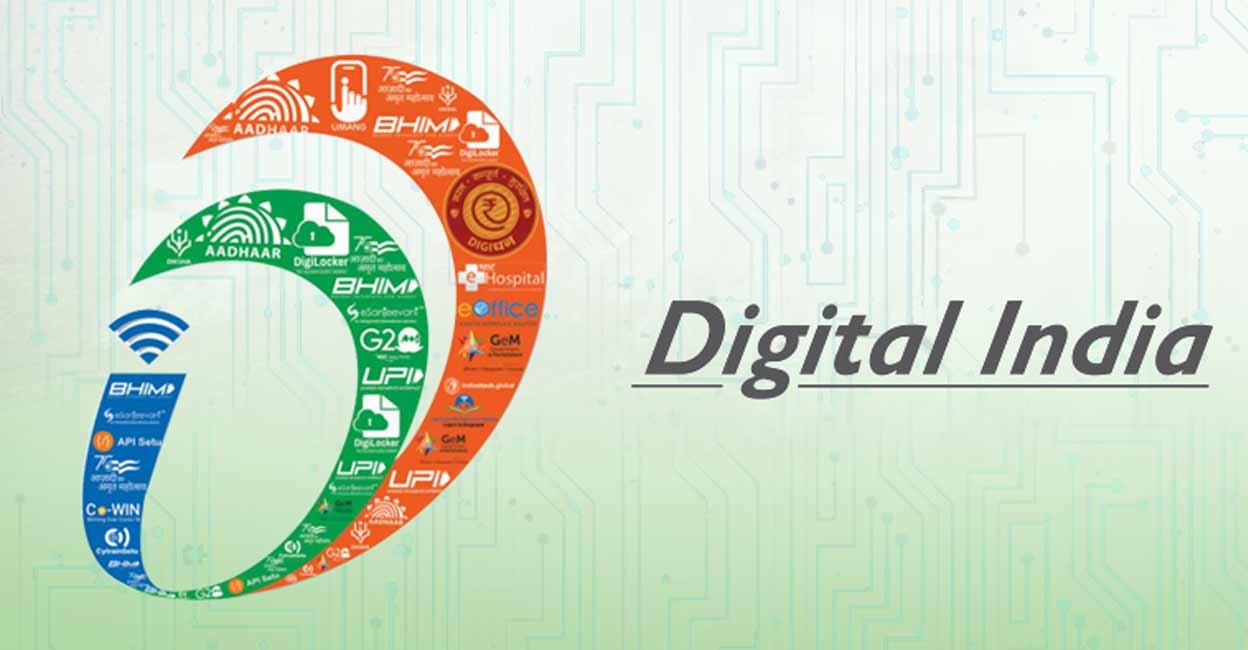
On July 1, 2025, India celebrated ten years of the Digital India initiative, which has significantly transformed the nation’s digital, financial, and governance landscape, driving India towards achieving Vision @2047. Launched on July 1, 2015 by Prime Minister Narendra Modi, the Digital India Mission aimed to transform India into a digitally empowered society and knowledge economy by enhancing internet access, improving digital infrastructure, and promoting digital services for all citizens.
Table of Contents
What Is Digital India Mission?
Digital India is an umbrella programme that includes many projects carried out by different Central Ministries, Departments, and State/UT Governments. It is administered by the Ministry of Electronics and Information Technology (MeitY) and rests on three core pillars:
- Digital Infrastructure as a Core Utility — ensuring every citizen has access to internet connectivity, a digital identity, and a bank account
- Governance and Services on Demand — making all government services available digitally, reducing paperwork and corruption
- Digital Empowerment of Citizens — digital literacy, access to information in local languages, and online education for all
Nine Pillars of Digital India Mission
The mission operates through nine strategic pillars:
- Broadband highways (BharatNet)
- Universal access to mobile connectivity
- Public internet access programs (Common Service Centres)
- e-Governance—reforming government through technology
- e-Kranti—electronic delivery of services
- Information for all (open data)
- Electronics manufacturing—Make in India
- IT for jobs (skill development)
- Early harvest programs (quick-win digital projects)
Key Achievements of the Digital India Mission (2015–2025)
1. Internet for Almost a Billion Indians
Internet connections grew from 250 million to 970 million—connecting farmers, students, workers, and entrepreneurs across India’s most remote regions to the global digital economy. India is now the world’s second-largest internet market.
2. UPI—The World’s Most Successful Digital Payments System
The volume of UPI transactions increased from 131.14 billion in FY24 to 185.85 billion in FY25, with a growth rate of 42%. India now processes more real-time digital payments than any other country in the world—more than the US, Europe, and China combined in real-time transaction volume.
3. DBT — ₹3.48 Lakh Crore Saved from Leakages
Direct Benefit Transfer (DBT) saved over ₹3.48 lakh crore by eliminating fake beneficiaries. The JAM Trinity (Jan Dhan–Aadhaar–Mobile) improved subsidy delivery and reduced corruption. Every rupee of welfare that previously leaked to middlemen now reaches the intended beneficiary’s bank account directly.
4. BharatNet — Broadband for Every Panchayat
As of 2025, BharatNet has made over 200,000 gram panchayats service-ready. Under the project, 692,000 kilometers of optical fiber cable (OFC) have been laid, with 1.221 million FTTH connections commissioned and 104,000 public Wi-Fi hotspots installed across villages.
5. Common Service Centers—Digital Centers—Digital Services at the Village Level
As of April 2025, India has 534,000 operational CSCs, including 417,000 in rural areas and 116,000 in urban areas, facilitating over 33.58 million transactions. These centers serve as the physical touchpoint of Digital India—where villagers can access government services, make payments, apply for schemes, and get documents digitized. digitized.
6. UMANG — One App for All Government Services
UMANG offers 2,300 services in 23 languages with 8.34 crore users and 597 crore transactions by mid-2025. From checking PM-KISAN instalments to accessing EPFO accounts, from viewing Aadhaar to filing RTI applications—UMANG has become India’s single-window digital government portal.
7. GeM—Transparent GeM—Transparent Government Procurement
The Government e-Marketplace (GeM) recorded ₹4.09 lakh crore in Gross Merchandise Value in just ten months of FY 2024–25. GeM has transformed government procurement by enabling small businesses, women entrepreneurs, and artisans to sell directly to government departments without middlemen.
8. IndiaAI Mission—The Mission—The Next Frontier
The IndiaAI Mission, launched in 2024, achieved 34,000 GPUs of national compute capacity by May 2025. The India Semiconductor Mission (ISM) approved six semiconductor projects worth ₹1.55 lakh crore, with five units under construction.
9. India’s Startup Ecosystem
India has become the world’s largest startup ecosystem, with over 180,000 startups, and is poised to see 60–65 million new jobs in the digital economy by 2025.
10. ONDC—Democratising Digital Commerce
ONDC, launched in 2022, now covers 616+ cities and supports 7.64 lakh sellers, giving small kirana stores and street vendors access to digital customers without being dependent on large e-commerce platforms.
Digital India’s Key Platforms and Services
| Platform | Purpose | Scale (2025) |
|---|---|---|
| UPI | Real-time payments | 185.85 billion transactions/year |
| Aadhaar | Digital identity | 1.4 billion enrolled |
| DigiLocker | Digital document storage | 35+ crore users |
| UMANG | Government services | 2,300 services, 8.34 crore users |
| GeM | Government procurement | ₹4.09 lakh crore GMV |
| BharatNet | Rural broadband | 2 lakh+ panchayats connected |
| CSCs | Village digital centers | 5.34 lakh operational |
| BHASHINI | Language AI | 22+ Indian languages |
| ONDC | Open commerce | 616+ cities, 7.64 lakh sellers |
Digital India 2.0 — The Road Ahead
Building on a decade of success, Digital India’s next phase focuses on:
- Artificial Intelligence: A Centre of Excellence in AI for education will be set up with a total outlay of ₹500 crore, and 50,000 Atal Tinkering Labs will be established in government schools by 2031.
- Semiconductors: The India Semiconductor Mission is building domestic chip manufacturing capacity to reduce dependence on imports
- Data Protection: The Digital Personal Data Protection Act (DPDPA) 2023 will significantly reshape the handling of personal data in India, introducing clearer rules for consent, data usage, and accountability.
- Rural digital literacy: Expanding Pradhan Mantri Gramin Digital Saksharta Abhiyan (PMGDISHA) to train rural citizens in basic digital skills
- BHASHINI: AI-powered language translation making all digital services accessible in every Indian language
Digital India Mission: Challenges Remaining
Despite extraordinary achievements, Digital India faces ongoing challenges:
- Digital divide—rural divide—rural women and the elderly remain significantly less digitally literate
- Cybersecurity—rapid digitization has increased exposure to fraud and scams
- BharatNet quality—challenges persist with quality of service, shifting deadlines, and inadequate private sector engagement.
- Data privacy—implementation of DPDP rules remains a work in progress
Frequently Asked Questions (FAQs)
Q1. What is the nodal ministry for Digital India?
The Ministry of Electronics and Information Technology (MeitY).
Q2. What is DigiLocker, and how do I use it?
DigiLocker is India’s official digital document wallet where citizens can store and share Aadhaar, driving license, degree certificates, PAN card, and other official documents digitally. Access it at digilocker.gov.in or through the DigiLocker app.
Q3. What is BharatNet, and is my village connected?
BharatNet is India’s rural broadband program connecting all gram panchayats with optical fiber internet. Check your panchayat’s connectivity status at bbnl.nic.in.
Q4. How many languages does UMANG support?
UMANG offers 2,300 services in 23 languages, making it one of the most linguistically inclusive government apps in the world.
Q5. What is the official website for Digital India?
digitalindia.gov.in
Conclusion
The Digital India Mission’s first decade has been one of the most consequential transformations in India’s post-independence history. From 25 crore internet users to nearly 100 crore; from zero UPI transactions to 185 billion per year; from leaky subsidy delivery to ₹3.48 lakh crore saved through DBT; from paper-based government to 2,300 services on a single app in 23 languages—Digital India has rewired how a billion people access money, services, information, and opportunity. As the mission enters its second decade—powered by AI, semiconductors, and the DPDP framework—India is not just catching up with the world in digital technology. It is leading it.

Rohanshi Mhatre aims to bridge the gap between government initiatives and citizens by delivering clear, reliable, and easy-to-follow information so that everyone can take advantage of available schemes.