Daily Study Plan for Government Exams 2026: Preparing for government exams like SSC, UPSC, Banking, and Railway requires a proper study plan. Many students fail not because of lack of knowledge, but due to poor planning and inconsistency.
In this guide, you will learn a daily study plan for government exam aspirants, along with smart strategies to improve your preparation.
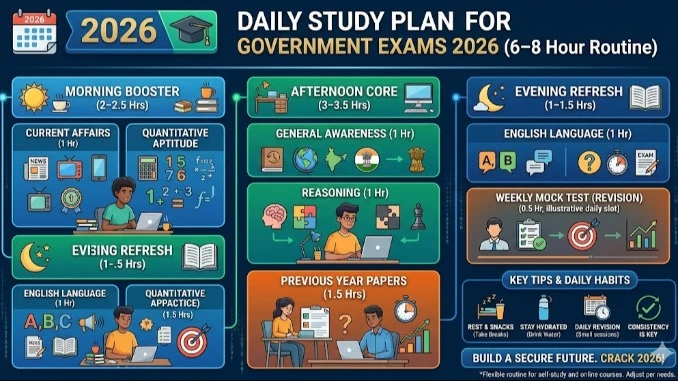
Table of Contents
Daily Study Plan for Government Exams 2026 (6–8 Hour Routine)
🎯 Why a Study Plan is Important?
- ✅ Helps manage time effectively
- ✅ Covers all subjects
- ✅ Improves consistency
- ✅ Reduces stress
👉 A proper plan is the key to success.
🧠 Ideal Daily Study Plan (6–8 Hours)
🌅 Morning (2–3 Hours)
- Study difficult subjects (Maths/Reasoning)
- Focus on concepts
🌞 Afternoon (2 Hours)
- Practice questions
- Solve previous year papers
🌇 Evening (1–2 Hours)
- Study English and General Knowledge
🌙 Night (1 Hour)
- Revision
- Current affairs
📚 Subject-wise Time Distribution
- Quantitative Aptitude: 2 hours
- Reasoning: 2 hours
- English: 1 hour
- General Awareness: 1 hour
👉 Adjust based on your strengths and weaknesses.
⏳ Weekly Study Plan Strategy
- 5–6 days study
- 1 day revision + mock test
👉 Weekly revision is very important.
📊 Sample Daily Routine
| Time | Activity |
|---|---|
| 6 AM – 8 AM | Maths Practice |
| 10 AM – 12 PM | Reasoning |
| 2 PM – 3 PM | English |
| 5 PM – 6 PM | GK / Current Affairs |
| 8 PM – 9 PM | Revision |
Daily Study Plan for Government Exams 2026
⚠️ Common Mistakes to Avoid
- ❌ Studying without a plan
- ❌ Ignoring revision
- ❌ Not taking mock tests
- ❌ Overloading yourself
💡 Smart Study Tips
- ✔ Follow a fixed routine
- ✔ Take short breaks
- ✔ Avoid distractions
- ✔ Stay consistent
- ✔ Track your progress
🧘 How to Stay Motivated?
- Set small goals
- Reward yourself
- Stay positive
- Avoid comparison
- Stay focused on your goal
❓ FAQs
Q1. How many hours should I study daily?
6–8 hours is ideal.
Q2. Can I study at night?
Yes, choose a time that suits you best.
Q3. Is coaching necessary?
No, self-study is enough with discipline.
Q4. How to manage time effectively?
Follow a proper schedule and avoid distractions.
✅ Conclusion
A well-structured daily study plan can significantly improve your chances of success in government exams. Stay consistent, follow your routine, and keep improving every day.
Success comes with discipline and smart work.

Amita Gavas believes in empowering students with the right knowledge and guidance so they can confidently prepare for exams and secure a stable government career.